
CONSCIOUSNESS in a

HOLOGRAPHIC UNIVERSE

Exploring the intersection of consciousness, science, metaphysics, and the Western esoteric traditions in search of a more complete understanding of reality and our place in it

Lieze Boshoff || The Quantum-Holographic Hermetica | A Modern Scientific Exploration of the Seven Fundamental Principles of Ancient Hermetic Philosophy - Book Cover Front
coming soon

The Quantum Holographic Hermetic

A Modern Scientific Exploration for the Seven Fundamental Principles of Ancient Hermetic Philosophyu200b

Hermeticism is a metaphysical tradition attributed to Hermes Trismegistus and preserved in the Corpus Hermeticum. It has shaped many esoteric and mystical schools of thought.

The Quantum-Holographic Hermetica explores parallels between the seven Hermetic principles and contemporary research in quantum physics, information theory, holographic models of reality, and consciousness studies. It asks whether ancient Hermetic ideas anticipated structures that modern science is now beginning to formalise.

The book develops a rational framework for examining consciousness, synchronicity, altered states, psi phenomena, and symbolic cognition. It treats science and esoteric traditions not as opposites, but as potentially converging approaches to the same underlying questions.

The result is a re-examination of reality and human experience that challenges strict materialism while remaining grounded in critical inquiry and empirical openness.

Essays

The Gateway Report is often treated as an isolated curiosity: a declassified document that appears to sit at the edge of science, psychology, and speculation. Read in context, it becomes something more specific, reflecting a moment when intelligence agencies were actively asking whether consciousness itself had operational value. The underlying motivation being that, during the Cold War, both the capitalist West and soviet East, were searching for any domain — even those that sat outside of technical intelligence including perception, cognition, attention, and altered states of consciousness — that might offer a martial advantage.

why was the CIA interested in consciousness?

The Gateway Report is often treated as an isolated curiosity: a declassified document that appears to sit at the edge ...

Ancient cosmogonies are not literal or empirical descriptions in the modern scientific sense, but their symbolic structures appear closely aligned with the conceptual patterns found in contemporary physics and cosmology. This raises the possibility that mythic language, through symbolism and allegory, may have encoded a form of intuitive cosmological structure that resonates with modern scientific descriptions of the early universe. And I for one, can’t help but think that maybe, just maybe, our ancient ancestors understood more about the origins of the cosmos and our place in it than what we gave them credit for.

cosmogenesis in ancient myth & modern physics

Ancient cosmogonies are not literal or empirical descriptions in the modern scientific sense, but their symbolic structures appear closely aligned ...
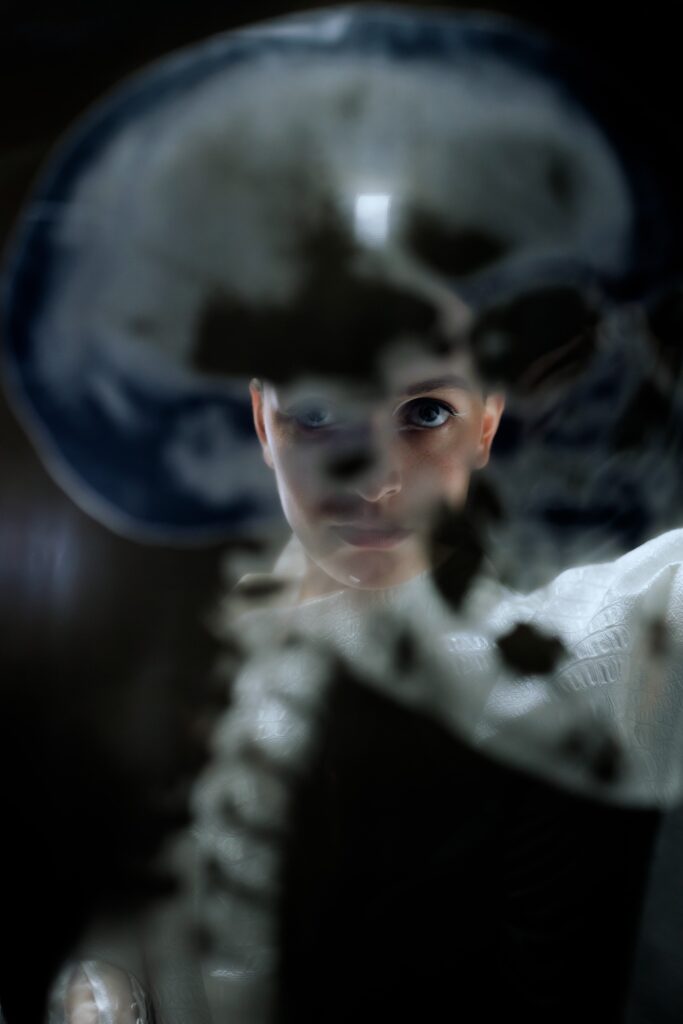
The brain. What a wonderfully complex, and utterly fascinating organ it is, defying almost any attempt at trying to understand it. How does a collection of neurons give rise to the vivid, ineffable experience of being? Where does awareness emerge, and what is the seat of consciousness? The question of how subjective, phenomenological experience arises from purely physical matter, remains unresolved, with logic and computation alone seemingly insufficient to explain it.

quantum consciousness & the machinery behind the quantum brain

The brain. What a wonderfully complex, and utterly fascinating organ it is, defying almost any attempt at trying to understand ...
We assume the world is solid, separate, real. Rocks, trees, stars… they appear as the building blocks of existence. Yet beneath each object lies a lattice of invisible harmonies, a field of coherence from which forms emerge. Matter is not primary. It is a crystallisation of pattern, a shadow cast by the light of consciousness itself. What we perceive as “things” are temporary focal points of enduring resonances, patterns that think, resonate, and endure within a deeper, unseen principle.

cosmic consciousness and the holographic universe

We assume the world is solid, separate, real. Rocks, trees, stars… they appear as the building blocks of existence. Yet ...

The way a civilisation understands the nature of reality also shapes how its people experience themselves within it. And ours has persistently reinforced the idea that reality is fundamentally material, mechanical, and indifferent, reducing human beings to something similarly impersonal and mechanistic, until we eventually begin to experience ourselves that way too.

why so many people feel existentially disconnected from reality

The way a civilisation understands the nature of reality also shapes how its people experience themselves within it. And ours ...
Most people are working with fragmented models of reality. On the one hand we have science explaining the mechanisms of it, but also largely excluding lived experience. On the other hand we have spiritual and esoteric systems accounting for all the weird and wonderful aspects of our lived experience, but are often dismissed as woo-woo and irrelevant for us modern people. And somewhere in the middle, Philosophy oscillates between the two but without really resolving the gap. The result? A lack of a shared language for not only understanding the reality and the material world we live in. 

moving from observation to participation

Most people are working with fragmented models of reality. On the one hand we have science explaining the mechanisms of ...

About

Trained within the conventional sciences, I explore consciousness, psi, anomalous experience, and ritual practice. I do this through an intellectually grounded synthesis of neuroscience, metaphysics, and Western esoteric traditions. The aim is to develop a more coherent understanding of reality and our place within it.

My work is guided by three questions: Who are we? What kind of world do we inhabit? And how can we participate in it more consciously and effectively?

I write for eclectic thinkers, pragmatic magicians, and exploring experiencers. The goal is to help them develop a coherent understanding of consciousness, anomalous experience, and reality, so they can orient themselves within a more participatory world and engage with it more consciously.

Lieze Boshoff | Wyrd Science Logo Light

Join the Newsletter

◦ exploring consciousness, psi, anomalous experience + ritual practice through an intellectually grounded synthesis of science, metaphysics + esoteric traditions ◡ towards the re-enchantment of reality without abandoning reason ◦

In my work I investigate consciousness, reality, and anomalous experience through the combined lenses of neuroscience, metaphysics, and Western esoteric traditions in an effort to develop a more coherent understanding of reality and our place within it. My aim to answer three questions: Who are we? What kind of world do we inhabit? And how can we participate in it more consciously and effectively?

Learn & Explore

David Bohm, PHD

David J. Bohm, PhD, was described as one of the most significant theoretical physicists of the 20th century

His main concern was with understanding the nature of reality and consciousness as a coherent whole, believing that the brain, at the cellular level, works according to the mathematics of some quantum effects, and postulated that thought is distributed and non-localised just as quantum entities are. His final appointment was as Professor of Theoretical Physics, Birkbeck College in England, and was appointed as Elected Fellow at the Royal Society.

Karl Pribram, PHD

Karl H. Pribram, PhD, was the eminent brain scientist, psychologist and philosopher.

His research focussed on cognitive psychology, cognitive science, neuropsychology, holonomic brain theory, and holographic consciousness. In 1992 he received an honorary doctorate in psychology from the University of Montreal, and in 1996 he received an honorary doctorate in philosophy from the University of Bremen. He was a professor at Georgetown University and an emeritus professor at Stanford University at the time of his death. 

Rupert Sheldrake, PHD

Rupert Sheldrake, PhD, is a biologist and author best known for his hypothesis of morphic resonance.

He is the author of more than 100 scientific papers and 9 books, and the co-author of 6 books. His research focusses on developmental and cell biology, as well as unexplained aspects of animal and human behaviour, such as telepathy, ESP, and precognition. He is currently a Fellow of the Institute of Noetic Sciences in California, a Fellow of Schumacher College in Devon, England, and a Fellow of the Temenos Academy, London. 

Institute of Noetic Sciences

The Institute of Noetic Sciences (IONS) is a nonprofit research organisation exploring consciousness and human potential.

Inspired by a profound experience of personal discovery, Apollo 14 astronaut Dr. Edgar Mitchell created IONS in 1973 in order to explore topics such as psi, intention, human consciousness and related phenomena. Today, they have the world’s leading team of multidisciplinary scientists, including Dean Radin, MS, PhD as Chief Scientist, conducting research on frontier topics in consciousness and its impact in our lives.

Society for Psychical Research

SPR was set up in London in 1882, the first scientific organisation ever to examine claims of psychic and paranormal phenomena.

Today, the SPR continues to promote and support the main areas of psychical research, carrying out field investigations, surveys and experimental work. It holds no corporate view about the true origin and meaning of psi phenomena. Their members represent a variety of researchers, academic and professional interests all over the world. They also welcome volunteers and those who wish to learn about the subject.

Shopping Basket